- 1. Introduction to Artificial Limbs and Prosthetic Legs
- 2. What Is a Below-Knee Prosthesis?
- 3. What Is an Above-Knee Prosthesis?
- 4. Differences Between Below-Knee and Above-Knee Prosthetics
- 5. The Prosthetic Assessment, Casting, and Fitting Process
- 6. Factors Affecting Artificial Leg Prices in Pakistan
- 7. Socket Comfort, Alignment, Components, and Follow-Up
- 8. Rehabilitation: Learning to Walk with a Prosthesis
- 9. How to Choose a Prosthetic Provider
- 10. OrthoPlus Prosthetic Services in Karachi
- 11. Frequently Asked Questions
1. Introduction to Artificial Limbs and Prosthetic Legs
Losing a limb is a life-changing event, but modern prosthetic technology has made it possible for many amputees to regain functional mobility and return to meaningful daily activities. An artificial leg—also called a prosthetic leg or prosthetic limb—is a custom-fabricated medical device designed to replace a missing lower extremity after surgical amputation.
In Pakistan, the most common causes of lower-limb amputation include complications from diabetes, traumatic road accidents, industrial injuries, and vascular disease. Patients looking for artificial leg services in Karachi have access to a range of prosthetic options, from basic modular systems to advanced carbon fiber and hydraulic knee technologies.
The type of prosthesis a patient needs depends on several factors, including the level of amputation, the condition of the residual limb (stump), overall health status, mobility goals, and professional recommendations from a certified prosthetist. It is important to understand that no single prosthesis is suitable for every patient—each device must be individually assessed, designed, and fitted.
2. What Is a Below-Knee Prosthesis?
A below-knee prosthesis (medically called a transtibial prosthesis) is designed for patients whose amputation occurred below the knee joint. Because the biological knee is preserved, this type of prosthesis generally allows for a more natural gait pattern and requires significantly less energy to walk compared to an above-knee prosthesis.
Key Components of a Below-Knee Prosthesis
- Socket: The custom-molded interface that fits around the residual limb. A well-fitting socket is critical for comfort, stability, and skin protection.
- Liner: A cushioning sleeve (often medical-grade silicone) worn between the skin and the socket. Pin-lock or vacuum-suction liners help prevent friction-related sores.
- Pylon (Shank): The structural connector between the socket and the prosthetic foot, typically made from lightweight aluminium or carbon fiber.
- Prosthetic Foot: Ranges from basic SACH (Solid Ankle Cushion Heel) rubber feet for indoor walking to dynamic energy-return carbon fiber feet for active outdoor mobility and sports.
According to published clinical literature, below-knee amputees typically expend approximately 10–40% more energy than individuals with intact limbs when walking, depending on their fitness level and prosthetic design. This is considerably less than the energy increase associated with above-knee amputation. Learn more about below-knee prosthetic options available at ArtificialLeg Prosthetics.
3. What Is an Above-Knee Prosthesis?
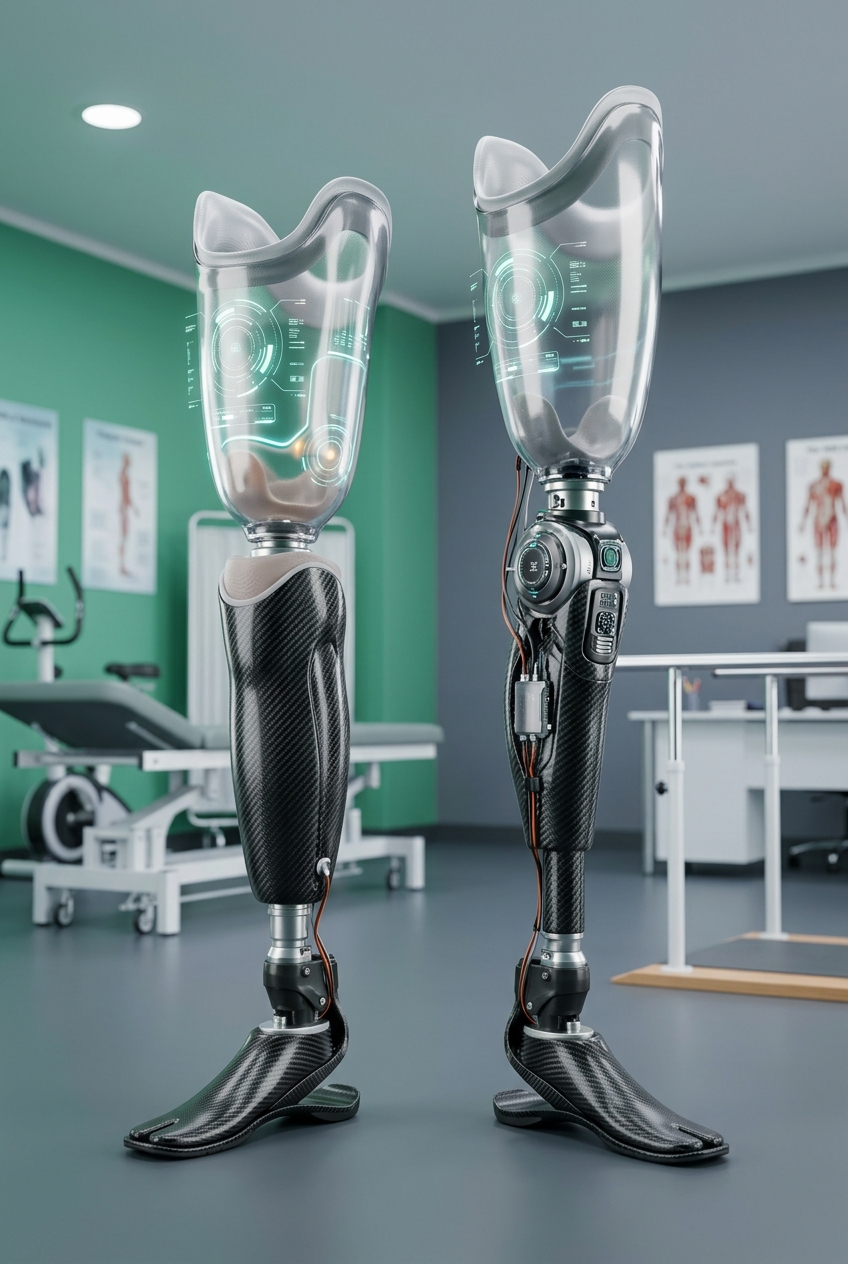
An above-knee prosthesis (medically called a transfemoral prosthesis) replaces the entire lower limb from the thigh downward, including an artificial knee joint and foot. Because the biological knee is lost, this type of prosthesis requires more complex engineering and greater patient effort to achieve functional walking.
Types of Prosthetic Knee Joints
- Single-Axis Mechanical Knee: A basic hinge mechanism suitable for patients with limited mobility goals. Affordable but provides minimal gait control.
- Polycentric (4-Bar) Knee: Uses multiple pivot points to provide improved stability during standing and a more natural swing phase during walking.
- Hydraulic Knee: Contains fluid-filled cylinders that provide resistance during both swing and stance phases, enabling smoother, more controlled walking on uneven surfaces.
- Microprocessor (Bionic) Knee: Uses embedded sensors and computer-controlled actuators to adjust resistance in real time, adapting to walking speed, terrain, and stairs. Examples include the Ottobock C-Leg and Genium systems.
Above-knee amputees generally experience a 60–100% increase in energy expenditure compared to non-amputees when walking, depending on the prosthetic knee technology used. Explore above-knee prosthetic solutions for more details.
4. Differences Between Below-Knee and Above-Knee Prosthetic Legs
| Feature | Below-Knee (Transtibial) | Above-Knee (Transfemoral) |
|---|---|---|
| Biological Knee | Preserved (natural knee) | Replaced (prosthetic knee) |
| Walking Energy | 10–40% increase over normal | 60–100% increase over normal |
| Component Complexity | Socket + pylon + foot | Socket + knee joint + pylon + foot |
| Rehabilitation Duration | Typically shorter | Typically longer and more intensive |
| Approximate Cost Range | Generally lower | Generally higher due to knee joint |
For a detailed comparison with clinical data, see our Below-Knee vs Above-Knee Prosthetics article.
5. The Prosthetic Assessment, Casting, and Fitting Process
Getting fitted for an artificial leg is a multi-step clinical process that requires the expertise of a certified prosthetist. Here is what a typical prosthetic fitting journey looks like:
- Initial Clinical Assessment: The prosthetist examines the residual limb's shape, length, skin condition, range of motion, and muscle strength. The patient's mobility goals, general health, and lifestyle are discussed.
- Measurements and Casting: Precise measurements are taken and a plaster cast or digital scan of the residual limb is made. This cast serves as the template for the custom socket.
- Check Socket and Trial Fitting: A transparent check socket (diagnostic socket) is fabricated and tested. The patient stands and walks in the trial prosthesis while the prosthetist evaluates fit, alignment, and pressure distribution.
- Component Selection: Based on the assessment, appropriate components are selected—including the socket material, liner, pylon, knee joint (for above-knee), and prosthetic foot.
- Final Fabrication and Delivery: The definitive prosthesis is fabricated with cosmetic finishing. The prosthetist performs final alignment adjustments and gait analysis.
- Follow-Up and Adjustments: Scheduled follow-up visits ensure the prosthesis continues to fit well as the residual limb changes shape over time. Socket modifications or component upgrades may be needed.
The entire process typically takes 5 to 10 working days for standard cases. For patients travelling from cities outside Karachi, such as Hyderabad, Sukkur, or Multan, a 48-hour express protocol may be available—patients should contact the clinic to confirm.
6. Factors Affecting Artificial Leg Prices in Pakistan
The cost of an artificial leg in Pakistan varies considerably based on several factors. Understanding these can help patients set realistic expectations:
- Amputation Level: Above-knee prostheses cost more than below-knee prostheses because they require additional components, including a prosthetic knee joint.
- Socket Material: Standard thermoplastic sockets are less expensive than custom carbon fiber composite sockets, which are lighter, stronger, and more breathable.
- Liner and Suspension: Basic belt suspension costs less than medical-grade silicone pin-lock or vacuum-seal liners, which offer superior comfort and reduce skin breakdown.
- Prosthetic Foot Type: A SACH rubber foot for basic indoor walking is far less expensive than a multi-axial carbon fiber energy-return foot designed for outdoor walking, stair climbing, and sports.
- Knee Joint Technology (Above-Knee): Single-axis mechanical knees are the most affordable; hydraulic and microprocessor-controlled bionic knees represent the premium tier.
- Brand and Origin: Genuine imported components from manufacturers like Ottobock (Germany) or Össur (Iceland) cost more than locally produced alternatives, but typically offer superior durability and performance.
For a detailed cost breakdown with current price ranges, visit our Artificial Leg Price in Pakistan 2026 guide or the pricing calculator.
7. Socket Comfort, Alignment, Components, and Follow-Up
The socket is the single most critical component of any prosthesis. A poorly fitting socket can cause pain, skin breakdown, blisters, and may discourage the patient from wearing the prosthesis altogether. Key principles include:
- Total Surface Bearing (TSB): Modern sockets distribute pressure evenly across the entire residual limb surface, minimising pressure points.
- Proper Alignment: The prosthesis must be aligned so that the patient's weight is transferred through the correct biomechanical axis, preventing compensatory movements that can cause back or hip pain.
- Silicone Liners: For patients with sensitive or compromised skin (particularly diabetic amputees), silicone pin-lock liners significantly reduce friction and protect against ulcers.
- Regular Follow-Up: Residual limbs can change shape over weeks and months, especially in the first year after amputation. Scheduled check-ups allow the prosthetist to modify the socket and maintain optimal fit.
Patients who experience persistent discomfort should contact their prosthetist promptly. Learn more about sockets and liners technology.
8. Rehabilitation: Learning to Walk with a Prosthesis
Receiving a prosthesis is only part of the journey. Prosthetic rehabilitation is the structured programme that helps patients learn to use their new limb safely and effectively. The rehabilitation process typically includes:
- Parallel Bar Training: The patient first practices standing and weight-shifting between parallel bars in a controlled clinical environment.
- Progressive Walking Training: Gradually transitioning from walking with bars, to a walker, to crutches, and eventually to independent walking.
- Balance and Stability Exercises: Targeted exercises to improve proprioception and prevent falls.
- Stair and Ramp Training: Once basic walking is achieved, patients practise ascending and descending stairs and inclines.
- Activities of Daily Living: Adapting to everyday tasks such as sitting, standing from a chair, getting in and out of a car, and managing different floor surfaces.
It is important to understand that walking outcomes vary from patient to patient. Factors such as age, overall health, amputation level, wound healing, and commitment to the rehabilitation programme all influence the final result. Not every patient will achieve the same level of mobility, and a qualified prosthetist will provide realistic guidance during the assessment process. For more on the patient journey, visit our Patient Recovery Journey page.
9. How to Choose an Appropriate Prosthetic Provider
Selecting the right prosthetic provider is a critical decision. Here are some factors patients should consider:
- Professional Qualifications: Look for a certified prosthetist and orthotist (CPO) with recognised training and credentials.
- Clinical Facilities: A proper clinic should have dedicated spaces for casting, trial fitting, alignment, and parallel bar walking trials.
- Component Quality: Ask about the brands and origins of the components being used. Genuine medical-grade components from established manufacturers generally offer better durability and safety.
- Aftercare and Follow-Up: A responsible provider offers scheduled follow-up appointments and will make socket adjustments as the residual limb changes over time.
- Transparent Communication: The provider should explain all options honestly, discuss realistic expectations, and not promise guaranteed outcomes.
Learn about the international prosthetic brands used by ArtificialLeg Prosthetics, including Ottobock, Össur, and Streifeneder.
10. OrthoPlus Prosthetic Services in Karachi
OrthoPlus (also known as Ortho Plus Clinic) provides prosthetic assessment, fitting, and rehabilitation services at its Karachi clinics. The organisation's publicly documented prosthetic services include:
- Custom below-knee (transtibial) artificial legs
- Custom above-knee (transfemoral) artificial legs with various knee joint options
- Carbon fiber dynamic energy-return prosthetic feet
- Medical-grade silicone pin-lock and vacuum liners
- Check socket trial fittings and parallel bar walking assessments
- VIP home visit services for patients unable to travel to the clinic
- A 48-hour express protocol for patients from interior Sindh and Balochistan
Clinic Locations in Karachi
DHA Phase-2 Branch
Plot 33c, 24th Commercial St, DHA Phase-2 ext., Karachi
Mon–Sat: 2:00 PM – 10:00 PM
Gulshan-e-Iqbal Branch
Shelezone Center, Block 15, Main University Road, Near Expo Center, Karachi
Mon–Sat: 2:00 PM – 10:00 PM
Patients from other areas of Karachi—including Clifton, North Nazimabad, Gulistan-e-Johar, Federal B Area, Saddar, and Malir—can visit either branch. People travelling from Hyderabad, Sukkur, or Multan should contact the clinic in advance to confirm appointment availability, discuss their requirements, and ask about travel arrangements.
11. Frequently Asked Questions
Q: What is the difference between a below-knee and above-knee artificial leg?
A below-knee prosthesis preserves the biological knee joint, which makes walking more energy-efficient. An above-knee prosthesis replaces the knee as well, requiring a mechanical or hydraulic knee joint and more intensive rehabilitation.
Q: How long does the prosthetic fitting process take?
Standard prosthetic fitting takes 5 to 10 working days from initial assessment to final delivery. Express protocols may be available for outstation patients.
Q: What factors affect the price of an artificial leg in Pakistan?
Key factors include the amputation level, socket material, type of prosthetic foot and knee joint, liner technology, and whether imported or locally manufactured components are used.
Q: Can I walk normally with an artificial leg?
Many patients achieve functional walking with a properly fitted prosthesis and appropriate rehabilitation. However, outcomes depend on individual factors and should be discussed with a qualified prosthetist during the assessment process.
Q: Where are OrthoPlus clinics located in Karachi?
OrthoPlus has two clinic locations: DHA Phase-2 (Plot 33c, 24th Commercial St) and Gulshan-e-Iqbal (Shelezone Center, Main University Road, Near Expo Center). Both are open Monday to Saturday, 2:00 PM to 10:00 PM.
Q: Does OrthoPlus offer home visits?
Yes, VIP home visit services are available across Karachi for patients who are unable to travel to the clinic, such as bedridden or elderly patients.
Q: Can patients from Hyderabad, Sukkur, or Multan get services?
Patients from these cities are welcome to contact the clinic to inquire about appointments, discuss their needs, and ask about the 48-hour express protocol designed for outstation visitors.
Request a Professional Prosthetic Assessment
Contact OrthoPlus to schedule a consultation at the DHA Phase-2 or Gulshan-e-Iqbal clinic in Karachi. The assessment will help determine the most appropriate prosthetic solution for your individual needs.