
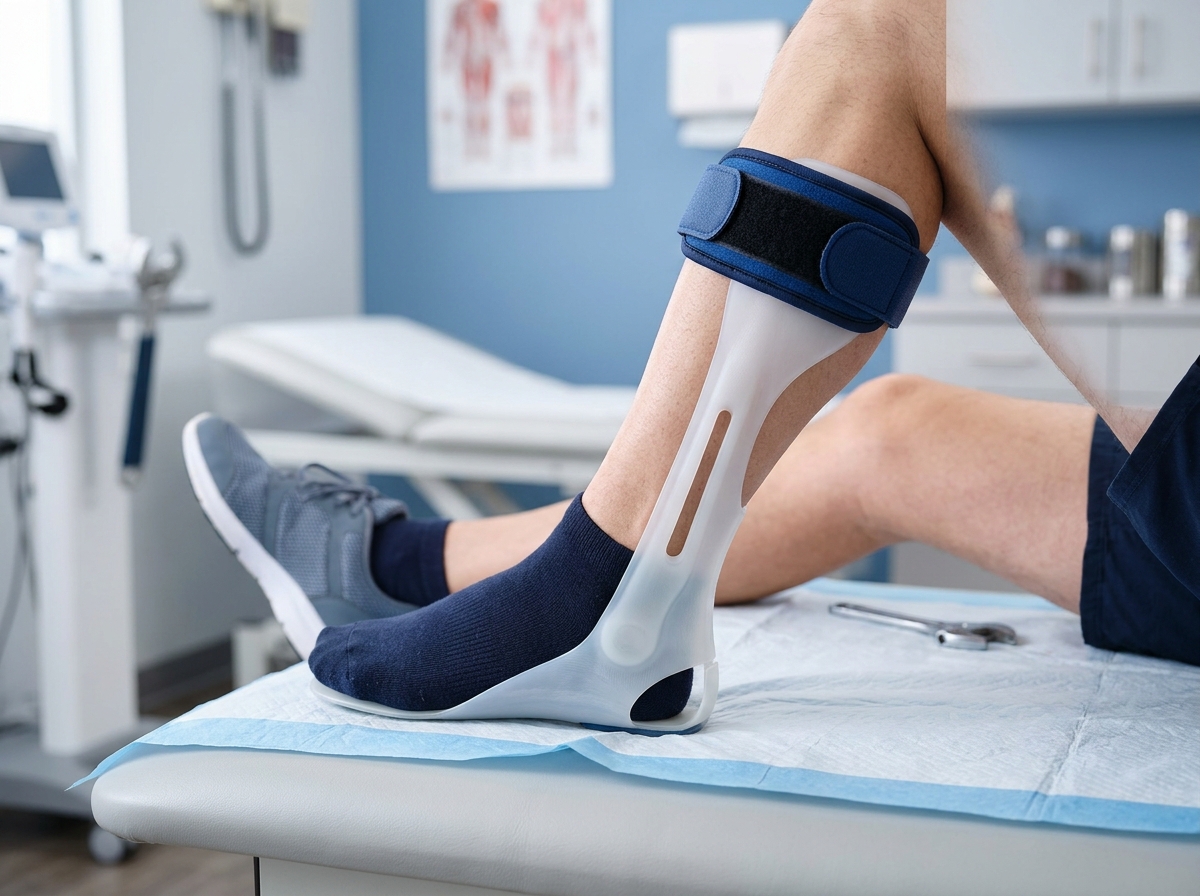
- 1. Introduction to Orthotic Devices
- 2. What Is an AFO (Ankle Foot Orthosis)?
- 3. Common Reasons for Prescribing an AFO
- 4. What Is a KAFO (Knee-Ankle-Foot Orthosis)?
- 5. KFO vs KAFO: Understanding the Terminology
- 6. Differences Between AFO, KAFO, and Other Braces
- 7. Orthotic Support for Foot Drop and Neurological Conditions
- 8. Modern Polio Calipers and Custom Leg Supports
- 9. Pediatric and Adult Orthotic Considerations
- 10. The Importance of Professional Fitting
- 11. Factors Affecting Custom Brace Prices
- 12. OrthoPlus Orthotic Services in Karachi
- 13. Frequently Asked Questions
1. Introduction to Orthotic Devices
Orthotic devices (commonly called braces, splints, or orthoses) are externally applied medical supports designed to control, guide, or restrict movement of a body segment. Unlike prosthetics—which replace missing limbs—orthotics work with existing limbs to improve their function.
In Pakistan, orthopedic braces are used to manage a wide range of musculoskeletal and neurological conditions, from simple ankle sprains to complex paralysis resulting from polio, stroke, or spinal cord injury. The effectiveness of any brace depends on accurate diagnosis, precise measurements, quality materials, and professional fitting by a certified orthotist.
Patients seeking orthopedic braces in Karachi can explore options at specialised orthotics centres that provide custom-molded devices tailored to the patient's anatomy and clinical needs. For an overview of available orthotic products, visit the orthotics and bracing hub.
2. What Is an AFO (Ankle Foot Orthosis)?
An AFO (Ankle Foot Orthosis) is a brace that encompasses the foot and extends up the back or side of the lower leg, reaching just below the knee. It is one of the most commonly prescribed lower-limb orthoses worldwide.
Types of AFOs
- Solid AFO (Rigid): Provides maximum ankle stability and is often used for patients with significant weakness or spasticity. It restricts ankle motion completely.
- Articulated AFO (Hinged): Includes a joint at the ankle that allows controlled dorsiflexion while preventing foot drop during walking. Suitable for patients who need some ankle movement.
- Posterior Leaf Spring (PLS) AFO: A thinner, flexible design that provides a spring-like push-off during walking. Commonly prescribed for mild to moderate foot drop.
- Ground Reaction AFO (GRAFO): Designed to provide a knee extension force, useful for patients with crouch gait patterns, such as those with cerebral palsy.
- Carbon Fiber AFO: A lightweight, energy-storing design that provides dynamic response during walking. Preferred by active patients who require durability without bulk.
- DAFO (Dynamic Ankle Foot Orthosis): A thin, flexible brace that wraps around the foot to provide sensory input and gentle correction. Frequently used in pediatric patients with low tone.
The choice of AFO type depends on the patient's specific condition, strength, activity level, and the clinical goals identified by the treating team. AFOs are available in custom-molded and prefabricated versions, though custom devices generally provide superior fit and function.
3. Common Clinical Reasons for Prescribing an AFO
AFO braces are prescribed for a variety of conditions affecting the ankle and foot. Common indications include:
- Foot Drop (Drop Foot): Difficulty lifting the front of the foot during walking, causing the toes to drag. Often results from peroneal nerve injury, lumbar disc herniation, or stroke.
- Stroke (Hemiplegia): One-sided weakness or paralysis affecting the leg and foot, making it difficult to maintain a normal gait pattern.
- Cerebral Palsy: Muscle tone abnormalities in children that affect walking posture and foot positioning.
- Multiple Sclerosis (MS): Progressive neurological weakness that can cause foot drop and ankle instability.
- Spina Bifida: A congenital spinal condition that may cause partial lower-limb paralysis.
- Peripheral Neuropathy: Nerve damage (commonly from diabetes) that weakens ankle and foot muscles.
- Post-Surgical Rehabilitation: Temporary bracing after fractures, tendon repairs, or nerve procedures.
It is important to understand that an AFO supports and assists function—it does not cure the underlying neurological or orthopaedic condition. Its suitability must be assessed individually by a qualified professional.
4. What Is a KAFO (Knee-Ankle-Foot Orthosis)?
A KAFO (Knee-Ankle-Foot Orthosis) is a more extensive orthotic device that supports the entire lower limb from the thigh to the foot. It includes a knee joint mechanism in addition to the ankle and foot sections found in an AFO.
KAFOs are typically prescribed when a patient has weakness or instability at both the knee and the ankle. The knee joint in a KAFO can be:
- Drop-Lock (Ring Lock): Locks the knee in full extension for standing and walking, and can be manually unlocked for sitting. Simple and reliable.
- Swiss Lock (Bail Lock): A spring-loaded mechanism that automatically locks when the knee extends, and unlocks with a lever behind the knee. Easier to use than drop locks.
- Stance-Control Knee Joint: Advanced mechanism that locks the knee during the weight-bearing (stance) phase of walking but allows free knee flexion during the swing phase, enabling a more natural gait.
- Free-Motion Joint: Allows unrestricted knee movement in both directions. Used when the goal is to control ankle position while allowing knee mobility.
KAFOs are commonly used for patients with post-polio syndrome, spinal cord injuries, muscular dystrophy, and certain cases of cerebral palsy. Learn more about KAFO devices on the KAFO brace service page.
5. KFO vs KAFO: Understanding the Terminology
Patients and families sometimes encounter the term KFO (Knee-Foot Orthosis) when searching for leg braces. It is important to clarify the correct clinical terminology:
- KAFO (Knee-Ankle-Foot Orthosis) is the correct, internationally recognised clinical term for a brace that spans the knee, ankle, and foot.
- KFO is sometimes used informally in Pakistan and South Asia, but it is not a standard orthotics classification. In most clinical contexts, what patients call a "KFO" is actually a KAFO.
- A true KO (Knee Orthosis) supports only the knee joint and does not extend to the ankle or foot.
When discussing your needs with an orthotist, using the term "KAFO" will ensure clear communication about the type of device you need.
6. Differences Between AFO, KAFO, and Other Orthopedic Braces
| Device | Coverage Area | Common Indications | Complexity |
|---|---|---|---|
| FO (Foot Orthosis) | Foot only (insole) | Flat feet, plantar fasciitis, diabetic foot | Low |
| AFO | Foot + ankle + lower leg | Foot drop, stroke, cerebral palsy, MS | Medium |
| KAFO | Foot + ankle + knee + thigh | Post-polio, spinal cord injury, muscular dystrophy | High |
| KO (Knee Orthosis) | Knee only | Ligament injuries, osteoarthritis, post-surgery | Low–Medium |
7. Orthotic Support for Foot Drop and Neurological Conditions
Foot drop is one of the most common reasons patients in Karachi seek orthotic care. It refers to the inability to lift the front part of the foot, causing it to drag during walking. This can lead to tripping, falls, and an abnormal compensatory gait pattern.
An appropriately designed AFO can hold the foot in a neutral or slightly dorsiflexed position, preventing toe drag and allowing safer, more efficient walking. The specific AFO design depends on whether the foot drop is:
- Flaccid (floppy): The foot drops due to complete muscle weakness—a rigid or posterior leaf spring AFO may be appropriate.
- Spastic (stiff): The foot is pulled downward by overactive muscles—a hinged AFO with a plantar flexion stop may help control spasticity while allowing movement.
- Mixed: A combination of weakness and spasticity may require a specifically tuned orthotic solution.
For neurological conditions such as stroke, cerebral palsy, and multiple sclerosis, orthotic management is typically part of a broader rehabilitation plan that may include physiotherapy, occupational therapy, and medical management. The brace alone does not treat the neurological condition—it supports the limb while other interventions address the underlying cause.
8. Modern Polio Calipers and Custom Leg Supports
In Pakistan, the term "caliper" is widely used to describe a KAFO—especially in the context of post-polio rehabilitation. Traditional polio calipers were made from heavy stainless steel with leather straps and basic locking knee joints.
Modern KAFO technology has advanced considerably:
- Carbon Fiber Construction: Ultralight carbon fiber KAFOs can weigh significantly less than traditional metal calipers while providing equal or greater structural support.
- Swiss Drop-Lock Knee Joints: Provide reliable knee stability during standing while allowing easy unlocking for sitting.
- Custom Thermoplastic Shells: Replace bulky leather cuffs, providing better hygiene, lighter weight, and improved cosmetic appearance.
- Stance-Control Mechanisms: Allow the knee to bend during walking's swing phase while locking safely during weight-bearing, creating a more natural walking pattern.
Patients who have been using older-style metal calipers may benefit from a reassessment to determine whether modern materials and designs could improve their comfort and mobility. Visit the polio rehabilitation braces service page for more information.
9. Pediatric and Adult Orthotic Considerations
Pediatric Orthotics
Children present unique orthotic challenges because their bodies are continually growing. Key considerations include:
- Growth Accommodation: Pediatric braces typically need replacement or adjustment every 6–12 months as the child grows.
- Developmental Stages: The orthotic design must be appropriate for the child's developmental stage—a brace that is too restrictive can hinder natural development, while one that is too permissive may not provide adequate support.
- Compliance and Comfort: Children are less likely to wear braces that are uncomfortable, heavy, or aesthetically unappealing. Modern paediatric orthoses come in various colours and can be made thinner and lighter.
- Common Paediatric Conditions: Cerebral palsy, spina bifida, clubfoot (CTEV), toe walking, and developmental delays.
Adult Orthotics
Adult patients have different considerations, including:
- Activity Level: Working adults may need a brace that fits inside standard footwear and allows them to perform their occupational tasks.
- Co-Morbid Conditions: Adults with diabetes, cardiovascular disease, or obesity require special attention to skin integrity and weight-bearing tolerance.
- Long-Term Durability: Adult braces are subjected to greater forces and need to be manufactured from durable materials.
- AFO-Compatible Footwear: Many adult patients need guidance on selecting shoes that accommodate their brace. AFO-friendly shoes with extra depth and removable insoles are available.
10. The Importance of Accurate Measurements and Professional Fitting
A brace is only as effective as its fit. The fitting process for custom orthopedic braces typically involves:
- Clinical Assessment: The orthotist evaluates the patient's condition, range of motion, muscle strength, skin integrity, and functional needs.
- Measurements and Casting: Precise measurements of the limb are taken, and a plaster cast or digital scan creates a negative mould of the patient's anatomy.
- Device Fabrication: The brace is manufactured using the mould to ensure an exact match to the patient's limb shape.
- Trial Fitting: The patient tries the brace under the orthotist's supervision. Adjustments are made to pressure points, alignment, and range of motion.
- Gait Evaluation: The patient walks with the brace while the orthotist observes the overall effect on walking pattern and posture.
- Follow-Up Appointments: Scheduled reviews ensure the brace continues to function correctly, especially as the patient's condition changes or a child grows.
Off-the-shelf braces can be useful for temporary or mild conditions, but for complex or long-term needs, custom-molded orthoses provide significantly better outcomes. An ill-fitting brace can cause pressure sores, joint misalignment, and may worsen the underlying condition.
11. Factors Affecting Custom Brace Prices
The cost of custom orthopedic braces in Pakistan depends on several factors:
- Type of Device: A simple FO (insole) costs less than an AFO, which costs less than a KAFO.
- Materials: Standard thermoplastic braces are more affordable than carbon fiber designs, which are lighter and more durable.
- Joint Mechanisms: A KAFO with a basic drop-lock costs less than one with a stance-control knee mechanism.
- Customisation Level: Fully custom-molded devices require more clinical time, materials, and expertise than prefabricated alternatives.
- Brand and Component Origin: Imported components from established manufacturers may carry a premium over locally produced alternatives.
For specific price guidance, patients should contact the clinic for a personalised consultation. Visit our AFO brace price guide and polio brace (KAFO) price guide for general pricing information.
12. OrthoPlus Orthotic and Brace Services in Karachi
OrthoPlus provides custom orthotic assessment, fabrication, and fitting services. The organisation's documented orthotic capabilities include:
- Custom AFOs for foot drop, stroke recovery, and neurological conditions
- Carbon fiber and thermoplastic KAFO calipers for post-polio and spinal cord injury patients
- Pediatric DAFOs and GRAFOs for cerebral palsy management
- AFO-compatible footwear and custom shoe modifications
- Knee orthoses for osteoarthritis and ligament support
- Custom biomechanical insoles for flat feet, diabetic foot, and plantar fasciitis
- Spinal braces for scoliosis and back pain management
Clinic Locations
DHA Phase-2 Branch
Plot 33c, 24th Commercial St, DHA Phase-2 ext., Karachi
Mon–Sat: 2:00 PM – 10:00 PM
Gulshan-e-Iqbal Branch
Shelezone Center, Block 15, Main University Road, Near Expo Center, Karachi
Mon–Sat: 2:00 PM – 10:00 PM
Patients from across Karachi—including Clifton, North Nazimabad, Gulistan-e-Johar, Federal B Area, Saddar, and Malir—can visit either clinic for an orthotic consultation. Patients from Hyderabad, Sukkur, or Multan are encouraged to contact the clinic beforehand to confirm appointment availability and discuss their specific needs.
13. Frequently Asked Questions
Q: What is an AFO brace and who needs one?
An AFO (Ankle Foot Orthosis) is a medical brace that supports the ankle and foot. It is commonly prescribed for foot drop, stroke-related weakness, cerebral palsy, and certain nerve injuries. A qualified orthotist determines whether an AFO is suitable based on individual assessment.
Q: What is the difference between an AFO and a KAFO?
An AFO supports the ankle and foot only, while a KAFO extends above the knee to also stabilise the knee joint. KAFOs are prescribed when there is weakness or instability at both the knee and ankle.
Q: Are custom braces better than off-the-shelf?
For complex or long-term needs, custom-molded braces provide a more precise fit, better biomechanical support, and greater comfort than generic off-the-shelf options. Prefabricated braces may be adequate for temporary or mild conditions.
Q: Can children wear AFO or KAFO braces?
Yes, pediatric AFOs and KAFOs are commonly used for children with cerebral palsy, spina bifida, and other developmental conditions. Paediatric braces need more frequent replacement or adjustment as the child grows.
Q: Will a brace cure my neurological condition?
No. An orthotic brace supports and assists limb function—it does not cure underlying neurological disorders, permanently correct every deformity, or eliminate the need for other treatment. It is one part of a comprehensive rehabilitation plan.
Q: How long does it take to get a custom brace fitted?
The process typically takes 5 to 10 working days from initial assessment and casting to final delivery. The timeline may vary based on the complexity of the device and the patient's clinical needs.
Q: What shoes work with AFO braces?
AFO-friendly shoes with extra depth, removable insoles, and wide openings are recommended. Standard tight-fitting shoes often cannot accommodate an AFO brace. Ask your orthotist for specific footwear recommendations.
Request a Professional Orthotic Assessment
Contact OrthoPlus to schedule a consultation for custom AFO, KAFO, or orthopedic brace fitting at the DHA Phase-2 or Gulshan-e-Iqbal clinic in Karachi.